Two harvest windows, not year-round availability
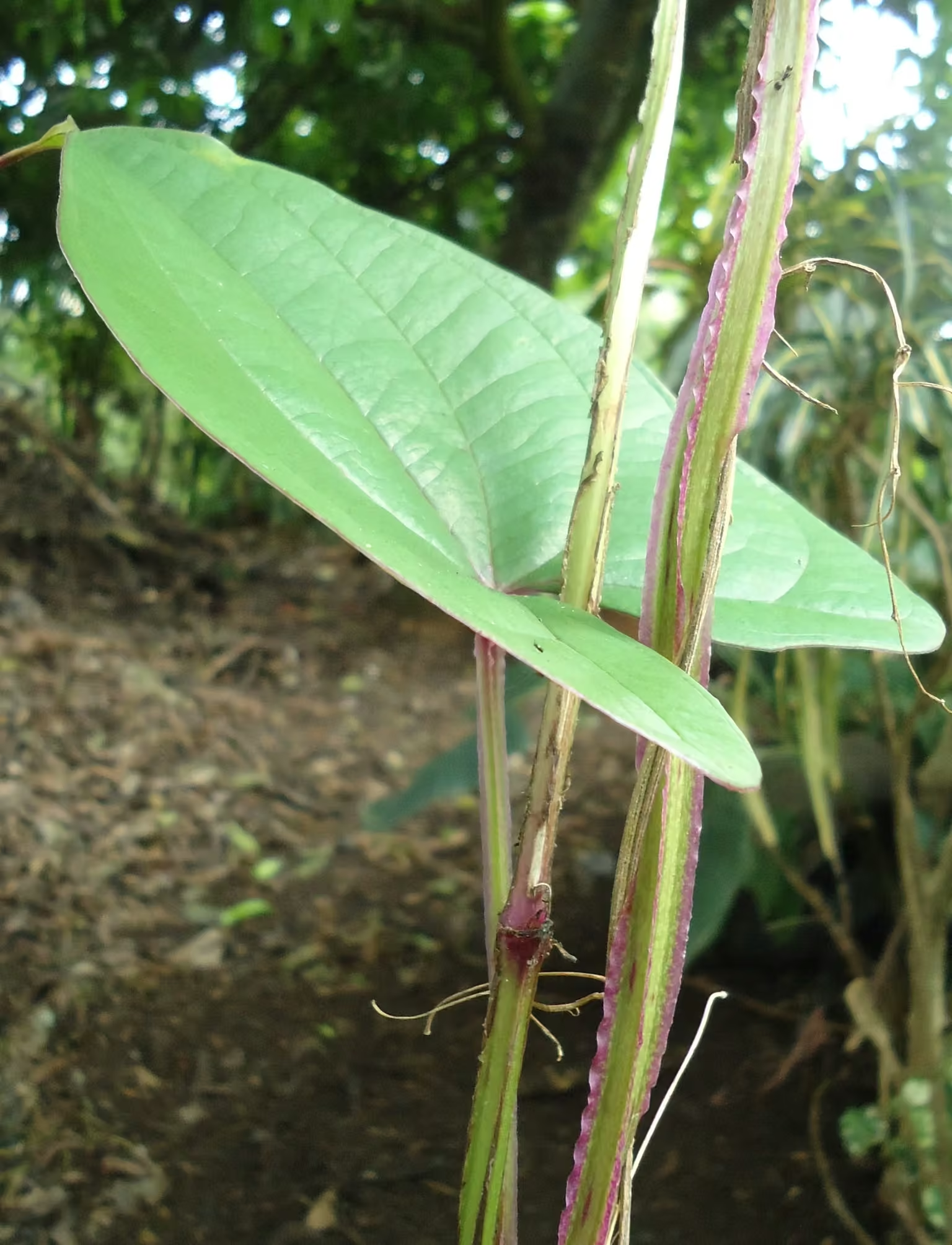
Philippine ube grows on two harvest cycles a year rather than in one continuous season. That is worth fixing before comparing offers: a quotation received in one month can rest on a very different point in the cycle than one received three months later, even from the same region. The plant itself, Dioscorea alata, is a climbing vine grown for the tuber that develops underground, and the vine's visible growth does not move in step with the tuber's readiness, which is one reason growers and buyers read the calendar differently. The two cycles broadly track the Philippines' dry and wet seasons, though exact timing shifts by region and is confirmed lot by lot rather than fixed on a public calendar. Processed formats add a second layer on top of the raw harvest: a batch of powder, purée or freeze-dried ube depends on drying, cooking or freezing capacity after picking, so it does not become available the moment tubers come out of the ground. Asking about ube season is really two questions: when does the fresh crop come in, and how far behind it do the processed formats trail.
- Fresh tubers: available only inside the two annual harvest windows, and only from growers who have picked and are actively selling that lot.
- Powder and purée: made from harvested tubers, so a new batch depends on drying, cooking or milling capacity after the harvest, not on the harvest date alone.
- Freeze-dried ube: usually the slowest link in the chain, since lyophilisation is a distinct processing step that most manufacturers run in smaller, less frequent batches.
Why ube stays hard to secure outside the harvest window
Buyers looking for ube outside its harvest window run into a consistent pattern: supply is thin across the sector, not just short at one supplier. The Philippines' Department of Science and Technology, through PCAARRD, its council for agriculture and natural resources research, has funded a project specifically targeting year-round production of Kinampay and other purple yam varieties in Bohol, one of the country's most documented ube-growing provinces. A research project built around reaching year-round output is itself a useful signal: it exists because production does not already run continuously. Two structural causes sit behind that gap. Ube growing in the Philippines runs largely through smallholder plots and cooperatives rather than a small number of large operations, so the volume available from any one region reflects many small harvests rather than one predictable output. Processing capacity, the drying, milling and cold-chain infrastructure that turns a fresh tuber into a sellable format, is limited relative to demand, which is part of why processed formats trail the raw harvest instead of following it immediately. Neither PCAARRD nor the Department of Agriculture publishes a month-by-month national harvest figure, so the clearest public signal remains the existence of that year-round-production research itself, not a published calendar.
What the calendar means for a sourcing plan
A harvest calendar only earns its place in a sourcing brief if it changes a decision. The points below translate the two-cycle pattern into choices worth making before contacting a grower or processor, not promises about what any one supplier can deliver. None of them fixes a date or a volume in advance; they only decide when a conversation about those should start.
- Send an enquiry ahead of a harvest window, not during it. Growers and processors spend the harvest itself on picking and initial processing, and a request that lands once picking is already underway competes with production for attention.
- Ask each candidate how it plans to cover the gap between cycles, rather than assuming continuity. A supplier who cannot answer that question in specific terms is telling you something about how a later order is likely to go.
- Read a quotation received near the end of a harvest window differently from one received mid-cycle. Confirm current picking status and processing backlog before comparing figures: the same price on paper can sit on a very different footing.
- For a project that depends on supply across the full year, plan around more than one grower or processor, ideally from more than one region, rather than one relationship carrying the whole calendar. Some buyers discuss a standing arrangement that spans both cycles directly with a processor; its terms are set between the two parties, not assumed here.
Ube: Filipino or Hawaiian? Clearing up the confusion before you brief a supplier
Ube is Dioscorea alata, a purple yam native to Southeast Asia and cultivated across the Philippines for generations, including in provinces such as Bohol, where the Kinampay variety is closely identified with the crop. By cultivation and culinary history, it is a Philippine ingredient, not a Hawaiian one. The confusion usually starts somewhere else. A purple product marketed in the United States as ube sometimes turns out to be purple sweet potato, Ipomoea batatas, a different plant sometimes sold as Okinawan sweet potato and long grown in Hawaii. The two share a colour and, in some recipes, a similar texture, but they are not the same species and do not carry the same specification. Exactly where that naming habit started is not something a government source documents, so this guide will not assign it a history it cannot support. What is documented is the species difference itself, and it belongs in a sourcing brief. State Dioscorea alata by name, ask the candidate to confirm the botanical identity of the lot on offer, and treat a purple colour on its own as no evidence of which plant is actually in the bag.
Sources & further reading.
- DOST-PCAARRD - Year-round production research in Bohol (11 April 2025)
- DOST-PCAARRD - Dioscorea alata crop profile
Editorial review: 7 September 2026.
Common questions.
Does ube have a season?
Yes. Philippine ube follows two harvest cycles a year rather than a continuous supply, and processed formats such as powder or purée trail the fresh harvest by whatever time drying, milling or freezing adds.
Why is ube so hard to find outside the harvest window?
Supply is thin between cycles because ube growing runs largely through smallholder plots and cooperatives rather than a few large farms, and processing capacity is limited relative to demand. Neither factor is published as a national figure, but a Philippine government research project targeting year-round production points at the same gap.
Is ube Filipino or Hawaiian?
Ube, Dioscorea alata, is a Philippine crop by cultivation and culinary history. Some products sold as ube in the United States, including some associated with Hawaii, are actually purple sweet potato, Ipomoea batatas, a different species. Ask for the botanical identity before assuming which plant is in a bag.
When should a sourcing brief go out relative to the harvest calendar?
Ahead of a harvest window rather than during it, so a grower or processor can answer with an actual production plan instead of an estimate made while picking is still underway.